Monday

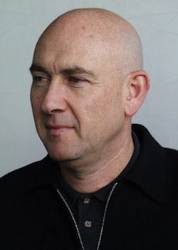
Jeffrey Shaw


Jeffrey Shaw is famous for his works that have the use of interactivity and virtuality. His works have been displayed in many museums and festivals worldwide. Before Shaw became a famous artist, he was born in 1944 in Melbourne, Australia. He then went to the University of Melbourne where he studied Architecture and Art History. After completing his education, Shaw started to travel the world. He studied sculptures in Italy and also in London. He then traveled to Amsterdam, Netherlands where he participated in a project called "Sigma Projects", with several other artists as well.


While Shaw was away studying, he founded and co-founded several productions and events. Those included the Artist Placement Group in 1967, the Eventstructure Research Group in 1968, Javaphile Productions in 1977, Founding Director of the Institute for Visual Media at the ZKM/Zentrum (Center for Art and Media Karlsruhe, Germany), and lastly the founding co-director of the Center of Interactive Cinema Research in Sydney Australia.
The idea of Shaw's work is to expose a viewer in visually stimulated spaces and make them see virtual reality.


UCI/Beall Center for Art

When I  traveled to the campus of UC Irvine, it was somewhat difficult to find to the Beall Center. It was difficult to find because it was in the middle of campus and it was not that big. The first thing I noticed before I walked in was this sign so I knew I was in the right place.


I continued to walk into the Beall center and saw a piece of work entitled "Biomorphic". I had no idea what to think of the work standing in front. It looked like a body that hung them self. As I got, the work started to inflate. After watching Biomorph, I read the wall plate off to the side that described what I had just seen in front of me. Biomorph was short for Biomorphic Wall, that would eventually form an abstract grid that recalls molecular patterns.


The next blown up figurines I saw was a piece of work entitled "Birds". It was interesting to watch this set inflate because each bird would inflate at different times and look as if they were flying by waving its wings. There was a total of six "birds" that would inflate back and forth as you would continue to walk through the center. This one was my favorite because it was the easiest to tell what the work was being focused on. It was also the most interesting because of the different timings that each bird would inflate.


The next creation I came across was a piece called "Inner Space". This one I could not figure out right away. From what I can remember, I think this one was supposed to resemble a space ship of some sort. It was supposed to resemble a space ship when it was completely inflated. This piece took the longest to inflate and it looked as though it did not get blown up all the way but then compared the photo I took and another photo taken from the UC Irvine Beall Center website and saw that we had captured somewhat of the same picture. Meaning that it was inflated all the way in what I saw.


After watching the three pieces of work inflate before my eyes, I expected to see more. As I turned the corner to see if there was, but this was it. I asked a student who was working the front door if there was anymore but he said no this was all for the inflatable bodies. I was a bit confused at first because when Glenn had mentioned this place was "small", I did not expect for it to be this small!
While I was at the Beall Center for Art and Technology, it was interesting to see that people had come up with the idea that figures that inflate is art. I have looked at art in all different ways and appreciate when someone puts forth the effort to display a good piece of work. I enjoyed watching and also learning about the expanding and contracting of the various configurations that I stood before.

Wednesday

Harold Cohen (AARON)


Harold Cohen has accomplished so much in his lifetime. He is most famous for his program AARON, a Cybernetic Artist. It all started in London where he studied painting at the School of Fine Arts. Shortly after in 1968, Cohen started teaching in the Visual Arts Department at the School of Fine Arts in London. During Cohen's time in London, his work was widely displayed in many different areas. Many events were international shows. Cohen represented Great Britain in the Venice Biennale, Documenta 3, Paris Biennale, and the Carnegie International. Most of his exhibit work is displayed regularly at the Robert Fraser Gallery in London.

In the late 1960s, Harold Cohen left London traveled to the United States, particularly San Diego, California. Cohen came to San Diego with a well established international reputation as an English painter. He was invited to the University of California San Diego as a visiting professorship. He took the offer so that he could because he was interested in computer programming and particularly in the field or artificial intelligence. After this offer, he never would return to London. A couple years later, Cohen was then invited as a Guest Scholar to spend two years at the Artificial Intelligence Laboratory at Stanford University. During his time spent at Stanford University, Cohen studied the process he is most famous for to this day. His work consisted of "building a machine-based simulation of the cognitive processes underlying the human act of drawing." This then sparked the program that Cohen now calls AARON. It is a program that produces "freehand" drawings in museums and science centers in the United States, Europe, and Japan. A museum that we are all familiar that you would be able to see this program, AARON, would be at the Los Angeles County Museum. Many other museums that include Cohen's work would be the San Francisco Museum of Modern Art, the Stedelijk Museum in Amsterdam, the Brooklyn Museum, the Tate Gallery in London, and the IBM Gallery in New York. There are also science centers that exhibit Cohen's work. Some including the Ontario Science Center and Pittsburgh's Buhl Center to name a couple. As you can see, Cohen is very well known internationally by the way his work is displayed across the world. Cohen now has his own permanent exhibit located in Boston at the Computer Museum and also represented the United States in the Japan World Fair in Tsukuba in 1985.

Not only is Harold Cohen an artist, he is also a very well known writer as well. Cohen has delivered invited papers at a number of different conferences. Some including the College Art Association, the American Association for the Advancement of Science, the International Joint Conference of Artificial Intelligence, and the Tokyo Nicograph Conference. Cohen has also produced a number of published writings. His first one being "What is an Image?" in 1979. Then came several more in the twenty years following.


Both pictures above display the plotting pen controlled by AARON. This intelligent machine, stated in the photo above, creates a hard copy of the artists original artwork. It took Harold Cohen nearly thirty years to perfect the program and to have the latest CyberArt advancements. But AARON is not just any ordinary sceensaver. The program was productized by Kurzweil CyberArt Technologies Inc. It is said that "AARON is the first fine art screensaver to utilize artificial intelligence to continuously create original paintings on your PC." Not only can AARON be considered a screensaver, it could even be a robot, the first robot in history to paint original art. Early efforts in creating AARON, can from Cohen studying a computer and how well it could produce a piece of artwork. At the time, the plotting pen from AARON could only produce what looked liked scribble, or something that could amount to a childrens' drawing. Over time, as Cohen had more time to develop his work, this kind of technology is able to mix its own paints, creates striking artwork and even washes its own brushes. AARON can make drawings about anything it knows about, but it actually knows very little. For example, people, trees, potted plants, and objects such as tables, boxes, and decorations because these figures are the most simple. AARON mainly controls itself, but with a little help from Cohen. "I don't tell it what to do. I tell it what it knows, and IT decides what to do." Early developments of AARON produced outlines of scribbles. Now AARON is able to construct a range of "core figures" to replace the scribble, and is smart enough to know that it shouldn't always draw the entire outline.


In a Question and Answer that Cohen participated in, he was asked the question "When you first began programming your robot and moving away from painting yourself, what was the reaction of other artists?" He answered by stating that he is unsure how other artists felt. He knew not everyone was going to like his work, but surprisingly got much feedback on how well he was doing. But then there is also the argument that AARON is not real artwork and it does not come from an artist that actually feels and owns the work he or she is creating. Another question I felt stood out to me was when Cohen was asked "The paintings we saw AARON created were all portraits of people. Does AARON also paint landscapes, animals, or other subjects?" Cohen responded by stating AARON will paint as much as it knows. Cohen often wonders if he should tell AARON more things so that it is able to produce more drawings. But came to the conclusion that it would not be any better for AARON to know how to do more, but simply do things it already knows better.


"I wrote it to discover what an independent (machine) intelligence might do, given some knowledge of the world and some rudimentary physical capabilities. And, in the process, to have IT teach ME about possibilities I hadn't imagined. I'd be happier if AARON's work in the future were LESS like human work, not MORE like human work."

Stated above is a quote from Harold Cohen describing what AARON is and what he would like it to do in the future. I feel as though this can be considered art but at the same time it could not be. The reason I feel it could not be considered art because you do not have physically have an artist actually sitting in front of a canvas, using a brush and paint to produce their artwork. Instead you have a robot painting a portrait that a human being designed it to do. On the other hand, I think that it can be considered art because an artist did create the robot program named AARON. I feel that artists are all about creating or designing something different when it comes to art, so how would this be any different. So I feel that it is art because it is something unique and different that no one has created before.
Tuesday

Erwin Redl

Erwin Redl was born in the year 1963 in Austria. In Vienna, Austria, Redl studied to be a musician and also received his Bachelors of Art at the Music Academy. He then took his schooling over the United States, where he received his Masters of Fine Arts at the School of Visual Arts in New York City. Redl now currently lives in New York. Erwin Redl is most famous for using LED(light emitting diode) lights in an artistic way. Redl takes his art both two dimensional as well as three dimensional. After looking at some of Redl's pieces, I never thought to consider this art. I just figured that it came with designing the building.


Redl is famously known not only in just the United States but also in other countries around the world. He became very well known after Matrix VI(first picture above) that is displayed on the front entrance to New York's Whitney Museum of American Art in 2002. Another work of Redl that came before Matrix VI was Matrix II(second picture above). This is one of Redl's most popular pieces of work and has a dimension of 36 ft x 26 ft x 12 ft. Matrix II has been displayed in many different countries including Germany, France, South Korea, and Austria. One other piece of work that has become famous within the United States is Redl's work called Nocturnal Flow(photo below). You can see Nocturnal Flow at the Paul G. Allen Center in Washington. The piece Nocturnal Flow is made up of 10,000 LED lights that cover a eighty-five foot floor to ceiling wall.

Sunday

Scott Blake


Scott Blake, also known as "Bar-Code Picasso" as described by FHM Magazine. In Art Papers Magazine, they describe Blake's work as "Simultaneously pop and op, intellectual and personal, minimal and ocular, appropriated and original." Scott Blake is one of the first original artist to design art through bar codes. His first masterpiece was a portrait of Jesus, made up of 10,000 UPC bar codes. UPC standing for Universal Product Codes. Ten years has gone by since Blake has created in his first piece using bar codes. Over that time period he has created more than thirty masterpieces. All the bar codes that Blake uses to create his works are all bar codes that in some what relate to the portrait. 

All of the designs Blake produces are digital portraits of cultural icons using actual bar codes connected to some aspect of their lives. For example, Blake has created a portrait of Oprah made up entirely of ISBN bar codes from her book club. Blake states "Interact with my art. Move beyond form to function." I believe Blake wants us to see beyond the bar codes. It is not just a piece of paper that he took off a product. The bar code is now art that means something to him. And now that can mean something to the viewers of the art. 


Toni Dove (Video)


Toni Dove is a video artist who lives and works in New York since the early 1990s. While studying Dove's work, i noticed that she only casts women in her work. She wanted all the emphasis to be on female characters and the roles each of them play in the different times of their lives. In the video that I have displayed above, Dove describes how she creates her work in her videos. The work that she is describing is one of her most famous pieces, "Ghosts". The name came about due to the ghostly qualities that the characters displayed, in the way that the characters are somewhat see through and can walk through anything.

In the picture that I have displayed above is from Dove's piece Artificial Changelings, produced in 1998. The photo was composed of interactive laser disk and sound installation while using video motion sensing. Each of Dove's works tell a story and our ongoing from one piece of work to the next. In Artificial Changelings, Dove deals with the emergence of compulsive consumerism. Spectoria is the next video that Dove produces and this one deals with the capitalist society of the early 20th century. I feel that throughout Dove's work, she likes to create a series of images that creates one big narrative. Bunt in order to get the big picture which is the narrative, you must study the images and put them all together. It is like a math problem that needs to be solved.

Monday

Identity Art Project

For this art project, I actually found it kind of difficult in what to create to identify myself. I did not want to do a traditional poster board because that is simply not me. I like things to be more creative and colorful when it comes to my work. So I did what I always do, go ask my mom to help me think of something to identify myself because she is the one that knows me the best. After discussing some ideas, one finally popped into my head. I would make a flower pot of pictures! Finally something great and would also be fun to make.

Once the vision of my flower pot was complete, I headed to The Home Depot to purchase a plastic pot. I then went to Michael's to get the rest of the supplies. The rest of the materials included green and gold pipe cleaner, dowels, pom poms, Easter grass, and foam heart stickers. Once arriving back at home, I ripped open all the packages to begin my project.

I was so pleased with the final outcome. It was so bright and colorful, just like I had wanted. Even though it took a couple trial and errors for the dowels to stay in the Easter grass, it finally worked out.


The reason why I chose a flower pot is because I love flowers. Mainly every type of flower. When flowers are healthy and at their best, they are so beautiful and pretty that sometimes I can't take my eyes off them. That is why I enjoy getting flowers because it brings so much happiness to me. And plus I love color. So I made sure to purchase the bright and colorful pom poms for the petals of the flowers. The main symbol of the flower with the pictures is that since the ovule is the center of a flower, I made the picture the center of my flower instead. The loved ones in the pictures are the ones I place first in my life and that have a place in my heart. They are the center of my life. One of the reasons I placed hearts all around the pot was because I was born on Valentine's day and I love anything to do with hearts. The second reason being I wanted to show all the love I have for the ones I have chosen to display as my flowers.

The ones that I have shown in the pictures above consist of my two brothers Ian and Allen. My mom, (couldn't find a picture of me and my dad :( ) my grandpa, my cocker spaniel named French Fry, my best friends Alyssa and Tara, and my boyfriend Marc.

I enjoyed creating this project because I am a shy person so it's hard for me to say how I feel. So by creating this project, it was fun because I like to show what I am feeling, rather than by saying it. I also like to create things that show people the kind of person I am. The identity project was definitely a fun one! :)